FireSmarting Your Spruce Acreage Before the Next Dry Season
Mature spruce around an acreage looks great and gives that classic Alberta shelterbelt feel. But when branches hang low, trees are crammed together, and dead material is left in place, those same trees can feed a fast-moving wildfire. Many Alberta acreage owners are surprised to learn how much of their fire risk comes from the structure of their trees, not just the grass and brush on the ground.
FireSmarting is a practical way to lower that risk without clear-cutting or making the yard feel bare. By changing how fuels are arranged, we can keep your spruce stand healthy, good-looking, and much harder for fire to move through. As ISA Certified Arborists working in the Edmonton area, we focus on how wildfire behaves around trees here in Alberta, and how to keep your spruce strong at the same time.
In this article, we’ll walk through how fire tends to move through spruce stands, why low branches and deadwood matter, how spacing affects fire behaviour, and when pruning is enough versus when selective tree removal is the safer long-term choice for your acreage.
How Wildfire Moves Through Spruce Stands
Around acreages in central Alberta, wildfire usually starts low. It might begin in dry grass, roadside brush, or debris that has built up over time. Once those fine fuels catch, the flames look for a path upward. Low tree branches act like a step stool that lets fire climb from the ground into the treetops.
The real problem is a continuous fuel path. When you have:
- Dry grass and needles on the ground
- Low live branches almost brushing the soil
- Dead branches and stubs along the trunk
- Tight, touching tops overhead
you give fire an easy ladder from the ground into the tops of your spruce, then from tree to tree. Mature white and Colorado spruce, which are common around central Alberta properties, can light quickly when they are packed close and full of dry material.
FireSmarting is about breaking those fuel paths. We’re not trying to strip your property or take away every tree. By changing structure, spacing, and how much dead material is present, we make it much harder for a fire to jump into the tops or rip along a dense row. Professional FireSmart services from ISA Certified Arborists focus on the right cuts and the right trees, not random thinning that can hurt both safety and tree health.
Tackling Ladder Fuels in Mature Spruce Rows
Ladder fuels are anything that helps a small fire climb up into your trees. On spruce acreages, ladder fuels usually look like:
- Live branches hanging low and touching tall grass or shrubs
- Dead stubs sticking out along the trunk
- Very dense foliage close to the ground
- Old branch piles and slash stacked under or between trees
If those lower layers light, flames can easily reach the green needles above. That’s why a big part of FireSmarting is raising the canopy height in a controlled, careful way. We prune the lower limbs so there is a cleaner gap between the ground fuels and the first live branches. That gap makes it much harder for a ground fire to step into the crown.
This work might look simple from the ground, but it takes skill. If lower limbs are removed too high, or if cuts are made too tight into the trunk, spruce can be stressed. That can lead to:
- More breakage in wind and heavy snow
- Higher chance of decay at poor cut sites
- Thinner, weaker crowns over time
Our ISA Certified Arborists look at each tree’s structure, lean, and overall health before pruning. We choose how high to lift the canopy, which limbs are safe to remove, and how to keep the tree balanced. For the Edmonton region, it’s usually better to plan larger ladder fuel work outside the coldest months and well ahead of the driest weeks so trees have time to respond.
Removing Deadwood Without Gutting Your Shelterbelt
Deadwood in spruce can hide in plain sight. On many Alberta acreages we see:
- Dead tops that never put on new growth
- Large dead limbs mixed into green crowns
- Broken, hanging branches caught up high
- Standing dead trees mixed in with live rows
Deadwood is a problem because it lights faster and burns hotter than green material. Those dry branches and tops can throw sparks into other trees, onto roofs, into barns or sheds, or across driveways that might be used for evacuation. In a tight shelterbelt, a lot of dead material in the crowns can turn one problem tree into a line of torches.
At the same time, we know some deadwood can be helpful for birds and other wildlife. The key is balance. Right around homes, outbuildings, propane tanks, driveways, and power lines, heavy dead material becomes more of a safety risk than a habitat bonus.
When we walk an acreage for FireSmarting, we look first at:
- Deadwood over structures and parking areas
- Limbs that could fall across driveways or escape routes
- Dead or broken stems near overhead wires or service lines
- Dead or dying trees that would be hard for fire crews to work around
Large dead or partly dead spruce often need climbing, rigging, and careful lowering. Dropping big chunks near fences, sheds, or wires is not safe. Proper FireSmart services from a professional tree company also include removing or chipping the debris, so you’re not left with new fuel piles sitting on the ground.
Spacing, Thinning, and When Removal Is the Right Move
Tight spacing is another reason spruce acreages carry higher fire risk. When crowns are all touching, a fire in the treetops can move quickly from tree to tree, especially in straight rows or blocks wrapped around a home.
Better spacing doesn’t mean removing every second tree throughout your land. On Edmonton-area acreages, it usually means:
- Breaking up long, solid walls of spruce near homes and driveways
- Thinning out clumps where trunks are very close together
- Creating gaps so crowns are not all pressed into one solid mass
Pruning changes the structure of trees you keep. We can raise crowns, thin select branches on problem sides, and reshape trees so they are less likely to carry fire or drop into structures. Pruning is often enough when:
- Trees are generally healthy
- There is some space between trunks and crowns already
- Lower limbs are the main ladder fuel problem near buildings
Selective removal means taking out entire trees that pose the highest risk. Removal makes sense when:
- Trees are growing almost on top of each other in dense rows
- Large spruce lean over roofs, power lines, or key access routes
- Trees have major defects, decay, or dead tops that can’t be fixed with pruning
Our ISA Certified Arborists can mark priority removals so you don’t over-thin and lose the privacy and wind protection you like. Spacing and removal work is best planned before peak dry periods so your spruce stand is in better shape when hot weather and low humidity return.
When to Call the Pros for FireSmart Tree Work
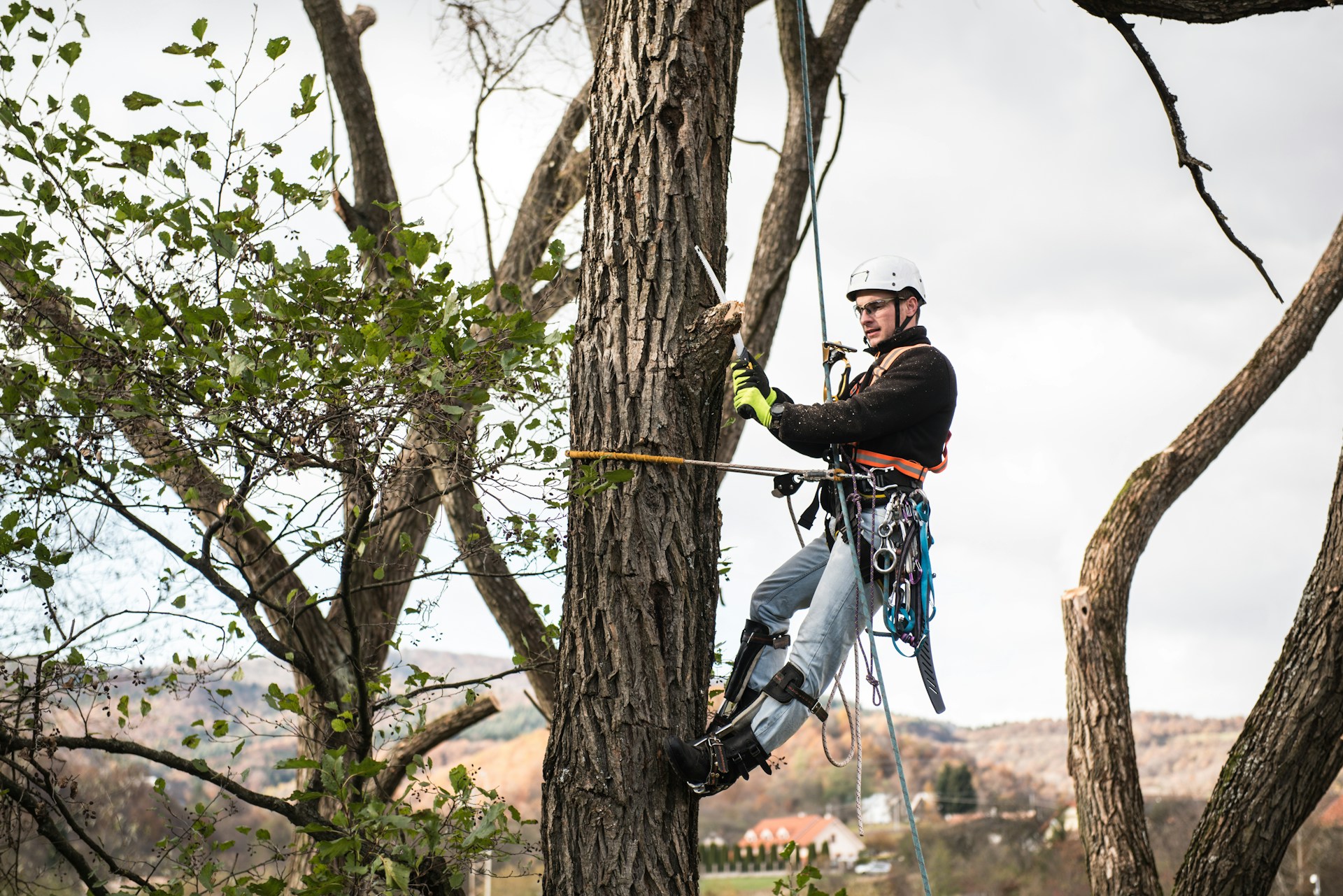
Climbing into mature spruce with a chainsaw or trying to drop large trees near homes, fences, or power lines is not a weekend project. The height, weight, and stiffness of spruce limbs make them tricky and sometimes unpredictable. Working at height with sharp tools, heavy wood, and variable wind is a serious safety risk.
As ISA Certified Arborists, we bring:
- Training in safe climbing and rigging
- Gear suited for tall, tight spruce stands
- Insurance to protect both workers and property
- Experience working on rural and acreage sites across the Edmonton area
When we come to an acreage for FireSmart tree services, we start with a walk-through and a straightforward talk about what we see. We point out high-risk trees, explain ladder fuels and deadwood in plain language, and suggest a practical plan that fits your goals for shade, shelter, and privacy.
The goal isn’t to strip your property bare. It’s to keep the character of your mature spruce, while giving your home, family, and evacuation routes a better chance if fire ever comes close. With the right mix of pruning, deadwood removal, and selective thinning, your Alberta acreage can stay both beautiful and better prepared.
Get Started With Your Project Today
Protect your property before wildfire season by booking our professional fire smarting services. At Bucks Tree Service, we assess your trees, remove high-risk fuel, and create practical defensible space around your home or business. If you are ready to schedule an on-site visit or have questions, please contact us so we can help you plan your next steps.